Inserloft Research001Active
Project Proteus
AI for the next generation of biological discovery.
Proteus explores how machine intelligence can help researchers understand, model and design biological systems, from proteins and molecules to broader discovery.
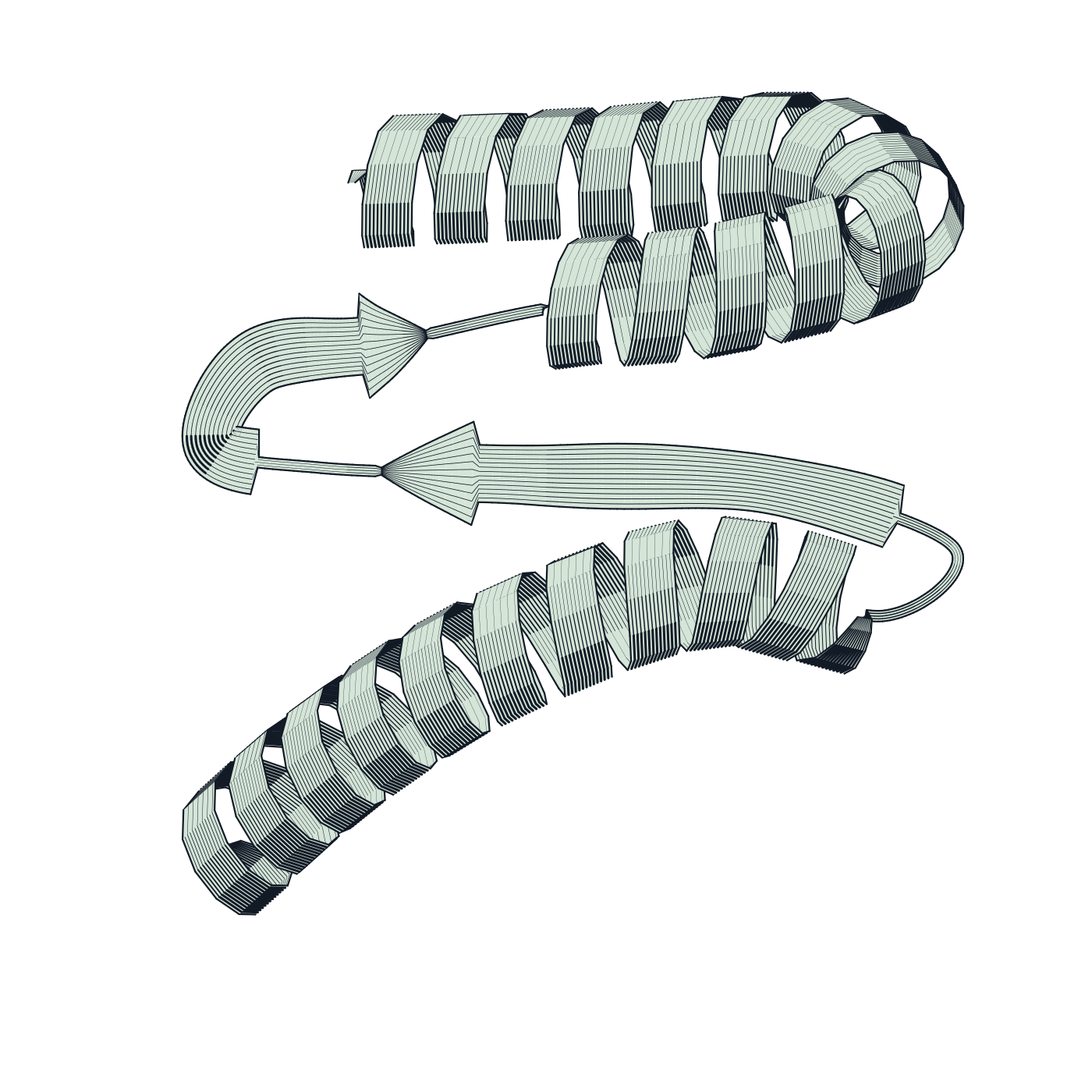
Why Proteus
Discovery is a search problem.
Biology is a vast space of possibilities. The challenge is deciding what to explore next.
A research system should not try to know everything. It should help determine what is worth knowing next.
- 01Observe
Learn from sequences, structures, interactions and measurements.
- 02Prioritize
Rank possibilities so attention goes where value is highest.
- 03Explore
Generate and investigate candidates to narrow the search.
- 04Learn
Feed results back to improve the next search.
The goal is not to predict everything. It is to make the next experiment more informative.
| Search space | Biological possibility |
|---|---|
| Objective | Better scientific decisions |
| Loop | Observe, prioritize, explore, learn |
Philosophy
Intelligence should expand scientific possibility.
AI should extend scientific reasoning, not replace it. The standard is whether it produces better science.
Evidence over appearance
Judge the work by reproducible results and validation, not by demos.
Exploration before certainty
Make room for unknowns in early research.
Models serve the research
Change architectures when experiments show a better path.
Research lines
Intelligence meets biology.
A research program with several connected directions.
- A
Protein intelligence
Learning from sequences, structures and functions.
- B
Generative biology
Generative models that propose and navigate design spaces.
- C
Discovery systems
Connecting models, data and evaluation into repeated research cycles.
- D
Biological representation
Making diverse biological data computationally usable together.
- E
Candidate search
Navigating large candidate sets under scientific constraints.
- F
Research infrastructure
Data pipelines, evaluation and compute.
Model foundation
CaelisNeuralBase 3 is now part of the Proteus foundation.
Inserloft Research released CaelisNeuralBase 3 (CNB 3), a public protein foundation model for design and discovery.
Scope
For a better world. For a better life.
Proteus is not tied to one disease or one target. It builds technology that makes biological discovery more tractable.
Human health
Medicine discovery, disease biology and therapeutic candidates.
Animal health
Veterinary medicine and animal disease research.
Nature
Understanding ecological systems and protecting living systems, where supported by science.
Long-term view
An open-ended scope, set by evidence and feasibility.
How it works
Think. Generate. Evaluate. Learn.
A continuous loop: every output is evaluated and fed into the next iteration.
- 01Observe
Collect biological data, results and context.
- 02Represent
Turn information into model-ready representations.
- 03Generate
Produce predictions, hypotheses or designs.
- 04Evaluate
Test against criteria, simulations or experiments.
- 05Learn
Feed results back into the system.
- 06Iterate
Repeat until the question sharpens.
System
A research stack, not a single model.
An evolving system of models, data, evaluation and tooling.
$ initializing proteus.research
$ loading biological representation layer
$ connecting model + data + evaluation
  search space: biological systems
  objective: accelerate discovery
  status: ACTIVE
_ awaiting next experiment
Scientific discipline
Fast research still needs slow truth.
Evaluation is part of the architecture. Predictions, simulations and experimental results stay distinct.
Measure
Meaningful evaluations, not impressions.
Compare
Benchmarks against credible baselines.
Validate
Computational results connected to stronger evidence.
Responsibility
Capability without care is not progress.
Biological design systems require scientific responsibility and awareness of misuse.
Scientific honesty
Preliminary results are never presented as established.
Responsible access
Outputs are shared to maximize legitimate value and limit misuse.
Human judgment
AI remains a research instrument; experts make the key decisions.
Building in public
Research should leave a trail.
The work becomes more transparent as it matures and becomes reproducible.
What may become public
Research notes, articles, model information, benchmarks, datasets and tooling, where appropriate.
What comes first
Scientific quality, reproducibility and responsible disclosure.
Why
Others can build on research that documents what worked and what failed.
Philosophy in practice
Build. Test. Measure. Repeat.
Intentionally unfinished, and expected to change.
| Current phase | Research and system development |
|---|---|
| Focus | AI-assisted biological discovery, protein intelligence, and generative design |
| Scope | Human health, animal health, and broader biological discovery |
| Method | Build → test → measure → learn → repeat |
| Organization | Inserloft Research |
The future
What comes next may not look like today’s models.
The long-term goal: AI systems that are useful partners in difficult biological research, grounded in evidence.
Model 001
Caelis Neural Base 1.
CNB-1 is the first experimental Proteus model. Early tests produced structured biological outputs, including a PET-hydrolase candidate of about 350 amino acids.

| Model | Caelis Neural Base 1 (CNB-1) |
|---|---|
| Status | Experimental research model |
| First target | PET-hydrolytic enzyme candidate |
| Evaluation | ProteinGym, TAPE Fluor, TAPE SecS, CATH Accuracy, FoldSeek |
| Experiment | Structured biological generation |
| Next | Structure, function, validation |
Structured outputs
Interpretable sequence candidates.
Biologically informed seed
A seed tied to a signal-peptide motif in natural PETases from Ideonella sakaiensis.
Computational benchmark
Benchmark results measure tasks, not biochemical activity.
Project Proteus, Inserloft Research.
Back to Research